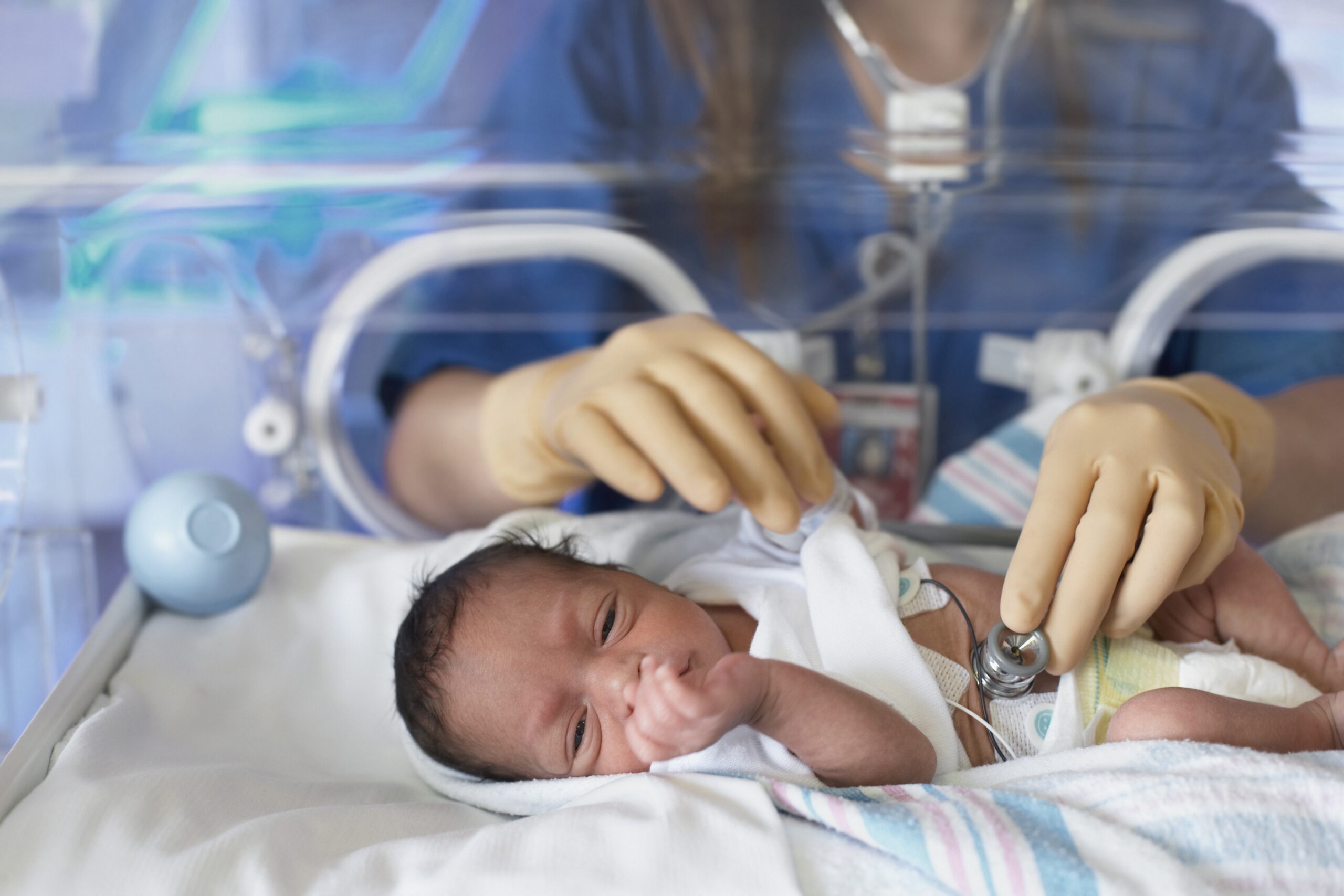
NICU Awareness Month: A Nurse Practitioner’s Reflections on the NICU Journey
Published Sep 9, 2026
By Jennifer Hanford, MSN, NNP-BC, IBCLC
Every September, we observe NICU Awareness Month — a time to honor the families whose babies are cared for in a neonatal intensive care unit, celebrate the health care professionals who show up for them every day, and shine a light on both the challenges and the triumphs that come with caring for critically ill or premature infants. As someone who has spent more than 20 years in this field, I wanted to share a bit about the work we do and what I hope people better understand about the NICU experience.
A Bit About Me
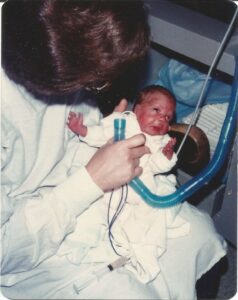 I like to joke that my NICU career started at birth. I am a twin and was born at 29 weeks’ gestation and spent many weeks in the NICU before being discharged. I am forever grateful for the care I received, and it’s my honor to provide that care back to families through my career.
Today, I’m a board-certified neonatal nurse practitioner and international board-certified lactation consultant. I earned my Bachelor of Science in nursing from Truman State University in Kirksville, Mo., and spent 10 years as a bedside nurse before going back to school. I later earned my Master of Science in nursing from the University of Missouri-Kansas City and have been practicing as an NNP ever since.
Advancing neonatal care is a real passion of mine, and I’ve had the opportunity to lead and participate in numerous quality improvement initiatives focused on improving outcomes for our most vulnerable infants and their families. Outside of my clinical work, I serve on the editorial board of NeoReviews, I’m actively involved with the Missouri Perinatal Quality Collaborative as a member of the Maternal-Child Learning and Action Network, and I’ve collaborated on publications, abstracts and presentations covering a variety of neonatal topics. When I’m not at work, you’ll usually find me reading, walking, traveling, rowing, or spending time with my husband and two sons.
What Is the NICU and Who’s on the Care Team?
The NICU is a specialized area of the hospital that cares for newborns who need advanced medical support — this includes premature infants as well as full-term babies with complex medical or surgical conditions. It truly takes a village: our NICU teams include neonatologists, neonatal nurse practitioners, nurses, respiratory therapists, physical therapists, occupational therapists, speech therapists, social workers, lactation consultants, milk technicians and many other specialists who help keep the unit running smoothly.
Why Do Babies End Up in the NICU?
Most people associate the NICU with prematurity, but that’s really just one piece of the picture. In fact, one of the most common reasons for admission is respiratory distress — both premature and full-term babies can experience breathing difficulties at birth that require specialized support and monitoring. Admissions can stem from a wide range of factors, including maternal conditions during pregnancy and delivery, as well as how a baby transitions to life outside the womb. Low blood sugar, difficulty staying warm, concern for infection or concern for a congenital condition are a few other common reasons a baby might need NICU care.
Building a Family-Centered NICU
So much of our work is about partnership. We take a family-centered approach with shared decision-making, empowering parents to take an active role in their baby’s care. Parents know their babies best, and they often notice subtle changes before anyone else does — their observations and involvement are invaluable to us.
All of our patients are cared for in private rooms, which gives families privacy and more opportunity to be actively involved in their infant’s care. We also offer 24/7 parental visitation because we know that parents are an essential part of the care team, not just visitors. And we welcome support from people — including doulas and other designated individuals — based on each family’s preferences and visitation guidelines.
Preparing Families for the Journey Home
 The transition from hospital to home is one of the biggest sources of anxiety for NICU parents, and it’s something we take seriously. One of the most valuable things we offer is a “rooming-in” experience before discharge, where parents stay overnight with their baby and take on primary responsibility for feeding, comforting and everyday care — much like the postpartum experience many of them missed out on after birth. Our staff stay close by to offer guidance and support, but the goal is to help parents feel confident caring for their baby on their own.
We also make sure families have follow-up care lined up before they leave, including an early visit with their pediatrician, and we coordinate developmental follow-up services for infants who may be at risk for developmental delays.
Supporting Families Emotionally
A NICU stay can be emotionally overwhelming, and our social work team plays a huge role in supporting families through it. They check in regularly, help address practical and emotional concerns, and connect families with helpful resources. One of the most valuable things we can offer is peer connection — our social workers often help connect families with others who’ve walked a similar path, so parents can find encouragement and understanding from someone who truly gets it. We also help eligible families access community resources because our goal is for families to feel supported both during their baby’s hospitalization and as they transition home.
Caring for the Caregivers
The NICU isn’t immune to burnout, and staffing challenges are real. The emotional toll of this work can build up over time. When difficult cases occur, we make it a priority to debrief as a team within a day or two — reviewing the case, talking through concerns, and sharing our thoughts and emotions in a supportive space. We’re also fortunate to have a “For You” peer support program that helps staff work through trauma, build resilience and develop healthy coping strategies after stressful events. Through all of it, we stay committed to keeping families informed, involved and supported — with regular communication, social work support and spiritual care available whenever a family wants it.
What Brings Me Joy
One of the most rewarding parts of this work is watching our patients “graduate” and go home with their families. Whether a baby has spent a few days or several months in the NICU, being part of that journey — and celebrating discharge day — never gets old. Some moments stay with me forever: helping a parent hold their baby for the first time or watching a family bond with an infant we weren’t sure would survive. There’s also a deep sense of satisfaction in working through a difficult resuscitation or critical illness and ultimately reuniting a healthy baby with their family.
A Message for NICU Families
If you have a baby in the NICU right now, or you’re preparing for that journey, please know this: you are not alone. The NICU experience is often described as a roller coaster, and for good reason — but our entire team is here to support, educate and guide you through it. Please ask questions and share your concerns openly. We never want you to carry the weight of worrying about something we can explain or help you understand.
Some days, progress will feel slow, and the road ahead may seem long. On those days, try to remember that a NICU stay is only one chapter in your baby’s story — a small piece of a much bigger journey. Celebrate the little things. Celebrate every milestone. Looking back, it will be hard to remember just how long those first days, weeks and months once felt.