From Presence to Partnership: Why Fathers Matter in Maternal Health
Published Jun 17, 2026
 As we approach Father’s Day, conversations about maternal and infant health often center on mothers and babies, but one voice is increasingly being recognized as an essential part of the care team: fathers.
For Brad Edwards, that work is both professional and deeply personal.
Edwards serves as the director of community engagement and program strategy for Dear Fathers, a national organization focused on Black fathers, family wellness, mental health and community engagement. He also serves as the director of men’s programming for The Doula Lab, helping develop initiatives that support men as partners, advocates and caregivers.
“My work sits at the intersection of fatherhood, maternal health, mental health and community advocacy,” Edwards said. “A lot of what I do centers on helping Black men understand their value, their voice and their responsibility within their families and communities.”
Whether he’s training fathers to advocate during pregnancy and childbirth, creating spaces for men to focus on their own wellness or helping organizations better engage fathers, Edwards says his goal remains the same: “Make sure Black men are seen, supported and equipped to show up for themselves and their families.”
Turning Grief Into Purpose
Edwards’ path into this work began with profound loss.
In 2017, he and his partner lost twins.
“At the time, I thought I was doing everything a father was supposed to do,” he said. “I was present. I cared. I showed up. But when things started to go wrong, I realized how unprepared I was.”
He didn’t know the statistics surrounding Black maternal and infant health. He didn’t understand the warning signs of complications. He wasn’t sure how to advocate within the health care system.
“Most importantly, I felt powerless.”
When the couple welcomed their daughter in 2020, Edwards approached the experience differently. He educated himself, worked closely with a doula and learned how to actively participate in developing the birth plan and advocating when needed.
“That experience showed me what was possible when fathers are intentionally included,” he said.
He realized there were countless fathers just like him: loving, committed men who wanted to support their families but had never been taught how.
“Everything I’ve done since has been about making sure fathers don’t have to learn these lessons the hard way.”
Moving Fathers From Spectators to Participants
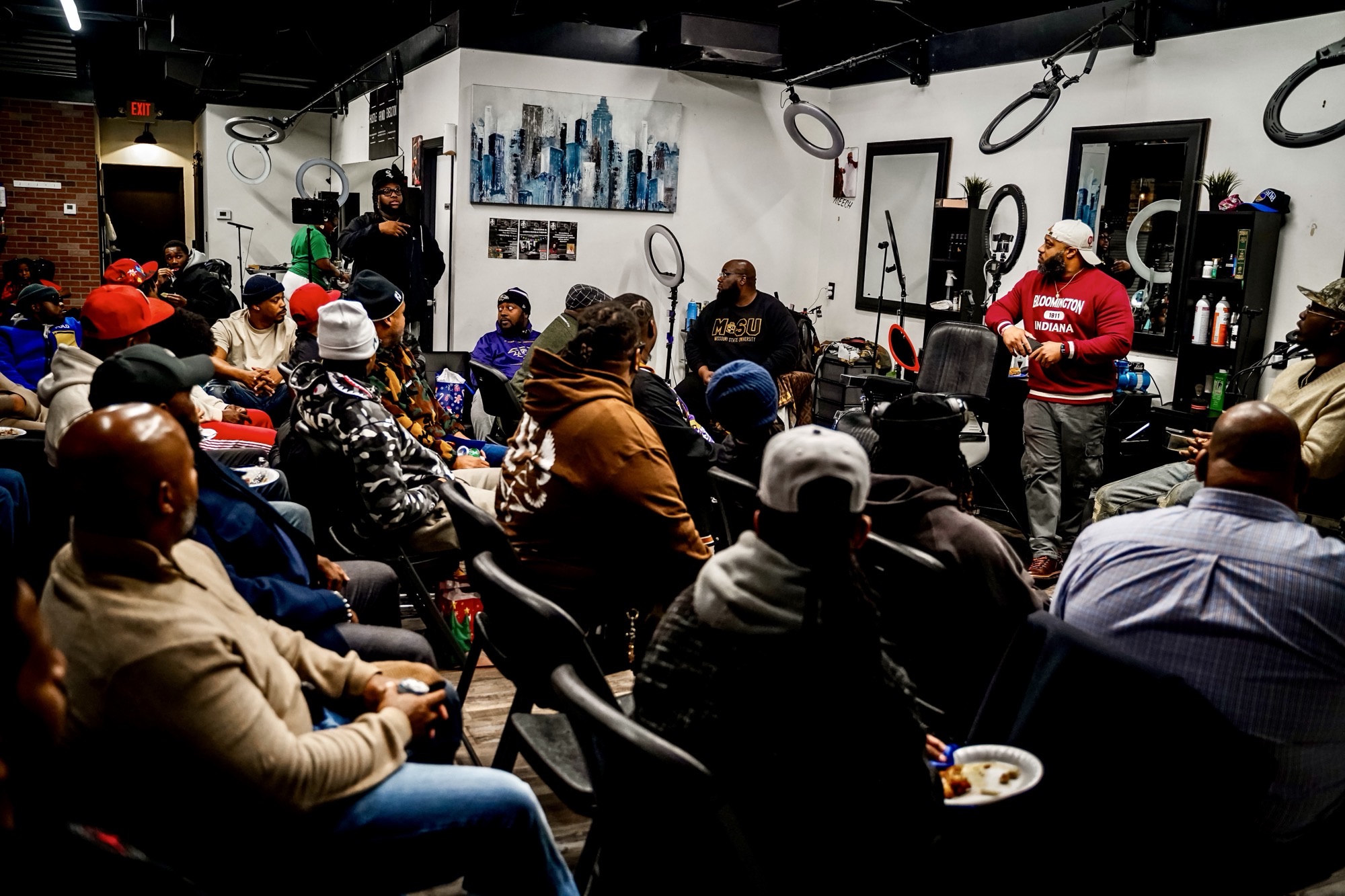
Across programs such as Dads to Doulas and STR8 Mental through Dear Fathers or Trail Talk and Chairs and Conversations with The Doula Lab, Edwards focuses on helping fathers move from passive observers to active participants in family health.
“In Dads to Doulas, we walk through real-life scenarios that fathers may encounter during pregnancy, labor and postpartum recovery,” he explained.
Participants practice advocacy skills, learning how to communicate effectively with health care providers, ask questions and recognize warning signs of complications such as preeclampsia or postpartum depression. Fathers also participate in birth-plan exercises designed to help them support their partners’ wishes and adapt when plans change.
Other programs focus on emotional wellness.
“Many men have never had space to discuss grief, anxiety, trauma or stress,” Edwards said.
Through guided discussions, storytelling, peer support and accountability exercises, fathers build emotional awareness and healthier coping strategies.
At The Doula Lab, men’s wellness programming extends beyond childbirth education to include hiking, fitness activities, mindfulness practices, nutrition education, physical health screenings and conversations about identity and purpose.
“We want men to understand that caring for themselves is part of caring for their families.”
Why Fathers Belong on the Care Team
Doulas and birth support are often viewed through a feminine lens, but Edwards believes fathers have an important role to play. 
“Dads to Doulas isn’t about turning fathers into doulas,” he said. “It’s about giving them the knowledge and confidence to support their partners and advocate for their families.”
Most fathers receive little preparation for what pregnancy, labor, postpartum recovery and infant development actually involve.
“Yet they’re expected to show up and know what to do,” he said. “We help fill that gap.”
When fathers understand what’s happening physically, emotionally and medically, they can provide stronger support. They become more confident. Their partners feel more supported. In some cases, they can even help identify concerns before they become emergencies.
“The reality is that maternal and infant health outcomes improve when fathers are informed and engaged,” Edwards said. “That’s not an opinion — it’s something we continue to see in both research and practice.”
Supporting Fathers, Too
While fathers are often expected to be pillars of strength, Edwards notes that many are carrying significant burdens of their own.
“A lot of men are balancing work, finances, family responsibilities, relationship changes and concerns about becoming a parent,” he said. “At the same time, many feel pressure to suppress their own emotions because they believe everyone else comes first.”
Many fathers have never seen healthy fatherhood modeled. Others may not know how to support a partner through postpartum recovery, recognize maternal mental health concerns or navigate health care systems.
Men also frequently delay seeking care for themselves.
“We ignore symptoms. We skip annual physicals. We avoid conversations about mental health.”
One message Edwards consistently shares with fathers is simple:
“You cannot pour from an empty cup. Taking care of yourself isn’t selfish. It’s part of your responsibility as a father, partner and provider.”
The Transformative Power of Fatherhood
 Among the accomplishments he’s most proud of, Edwards points not to statistics but to transformation.
“We’ve served hundreds of fathers across dozens of states and multiple countries through Dads to Doulas,” he said. “What stands out isn’t just the numbers — it’s the growth.”
He has watched fathers who once believed their role was solely financial come to understand that they also are advocates, nurturers, protectors and partners.
Some of his favorite moments happen after babies arrive.
“I’ve had fathers come back and say, ‘I used what we learned,’” Edwards shared.
Fathers have described recognizing warning signs during pregnancy, asking important questions during labor and feeling prepared to support their partners through postpartum challenges because of the training they received.
“Those stories matter because they represent healthier families and better outcomes,” he said. “That’s the work.”
A Father’s Day Reflection
As Father’s Day approaches, Edwards hopes people recognize the countless fathers quietly showing up every day.
“The dads getting up early for work. The dads making school drop-offs. The dads sitting in hospital rooms,” he said. “The dads healing from their own childhood experiences while trying to create something better for their children.”
His message is one of both encouragement and possibility.
“Fatherhood isn’t about perfection,” Edwards said. “It’s about presence.”
Looking ahead, he hopes systems and communities stop treating fathers as optional participants in family health.
“I want health care providers, schools and communities to intentionally include fathers from the beginning,” he said. “I hope we continue creating spaces where Black fathers can learn, heal and grow without judgment.”
Ultimately, his vision is simple.
“I hope every child grows up knowing they are loved, supported and valued by the people raising them,” Edwards said. “When fathers thrive, families thrive. When families thrive, communities thrive. That’s the future I’m working toward every day.”