
Building a Stronger Future for Missouri Moms and Babies
Published May 27, 2026
Improving maternal and infant health takes more than one organization or one solution — it requires collaboration, shared strategy and a commitment to listening to the people most impacted by care systems. That’s the work driving the Missouri Maternal Health Task Force, a statewide partnership focused on strengthening outcomes for Missouri moms, babies and families.
From Collaboration to Statewide Strategy
The Missouri Maternal Health Task Force evolved from the Maternal-Child Learning and Action Network, which has worked since 2018 to coordinate maternal and infant health partners across Missouri. In 2024, the MC LAN was designated as Missouri’s official maternal health task force and charged with developing a five-year statewide strategic plan through support from a Health Resources and Services Administration Maternal Health Innovation grant under the Missouri Collaboration for Clinical Community Integration in Maternal Health (MO C3).
According to Kaitlyn Thomas, director of maternal special projects for the MO PQC, the task force brings together a wide range of voices and expertise with one shared mission: improving the care of Missouri moms and babies.
“The MHTF strives to bring together the right people in the right way to drive the right actions for improving the care of Missouri moms and babies,” Thomas said.
Participants include OB-GYNs, maternal fetal medicine specialists, neonatologists, family medicine physicians and women’s health nurse practitioners, alongside leaders from state agencies, hospitals, community organizations and patient family partners.
 Why the Mini Summit Matters
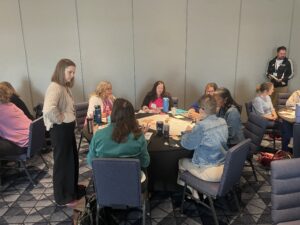
In April, members of the task force gathered in Jefferson City, Mo., for the MC LAN Mini Summit, a two-day strategy session centered on advancing the draft 2025-2029 Missouri Maternal Health Strategic Plan. The summit provided an opportunity for health care professionals, community organizations, state agencies and patient advocates to reconnect around shared priorities and discuss innovative ways to improve maternal health across the state.
While the task force meets virtually each month, the in-person Mini Summit created space for deeper conversations and stronger collaboration.
“This year’s summit was an opportunity for task force members to realign with the priorities included in the draft strategic plan and to dive deeper into conversations around several critical maternal health topics,” Thomas said.
Discussions focused on the following.
- expanding the role of the patient voice in maternal and infant health improvement efforts
- improving care coordination and resource referrals across systems
- advancing development of the MO C3 clinical and community integrated model of maternal care
The conversations reflected both the complexity of maternal health challenges and the importance of coordinated solutions that connect clinical care, community resources and lived experiences.
Addressing Maternal Health Challenges Across Missouri
The task force’s work is centered around several long-term priorities designed to strengthen maternal and infant health outcomes statewide, including the following.
- transforming care delivery and improving access to comprehensive care
- supporting and integrating the maternal health workforce and community partners
- strengthening technology, information sharing and data connections
- elevating strategic listening and storytelling
- enhancing patient experience and well-being
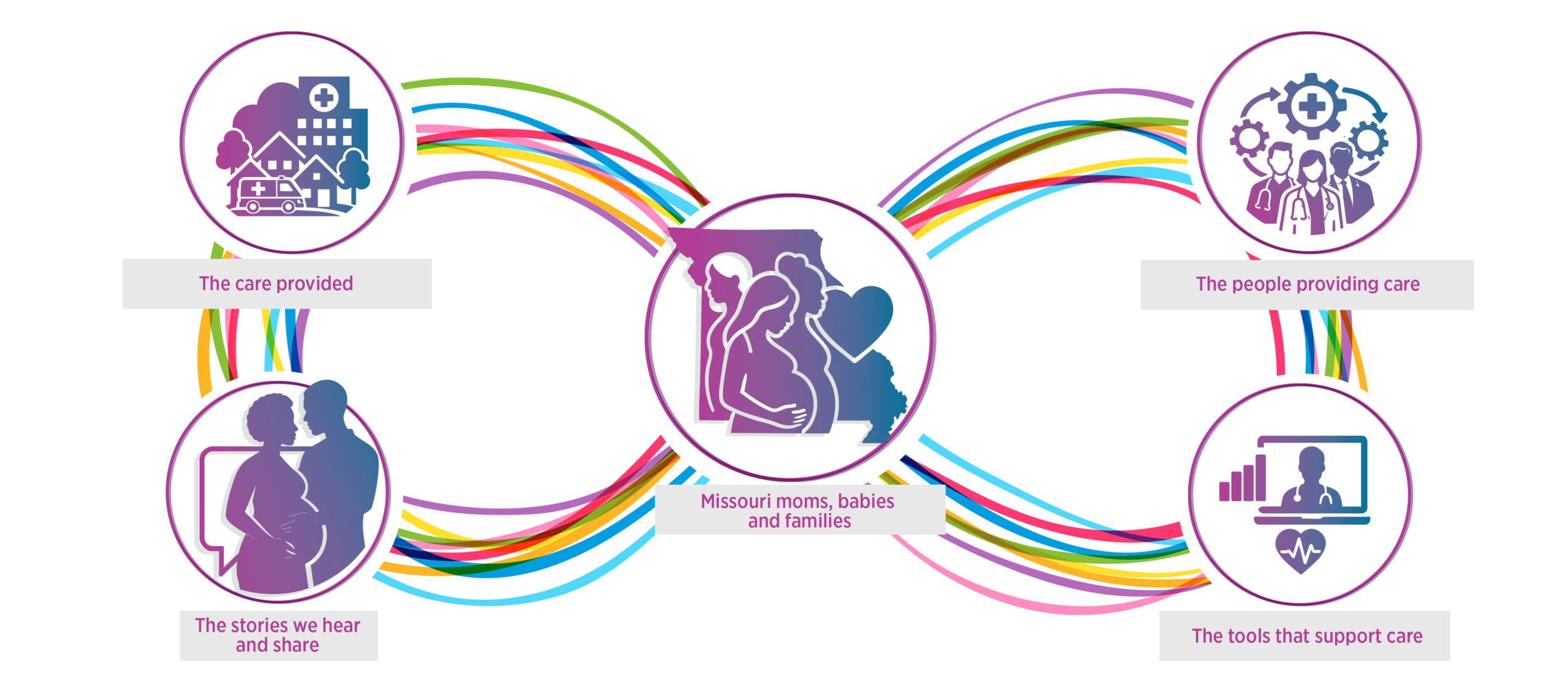
These priorities support both statewide systems-level improvements and ongoing initiatives already making a difference in Missouri communities, including hospital quality improvement projects, provider trainings, patient education campaigns, and efforts to amplify patient stories and lived experiences.
Thomas noted that one of the biggest opportunities lies in better connecting clinical and community care systems.
“We have tremendous opportunities to improve our care systems by integrating and coordinating across both clinical and community settings during pregnancy and the year after delivery,” she said.
Examples already happening across Missouri include doula integration within hospital settings, stronger referral networks to community-based organizations, maternal mobile integrated health programs, and improved transitions into postpartum and primary care.
Through MO C3, partners are working to create a more sustainable, data-driven framework that can expand those successes to more Missouri families statewide.
The Power of Partnership
For Thomas, one of the most meaningful parts of the work is the collaboration itself.
“It’s rare to have a group that represents so many important perspectives and critical organizations actively collaborating to improve systems,” she said. “Every time we gather, we leave better connected to our collective impact and energized.”
As Missouri continues developing its Maternal Health Strategic Plan, the work of the task force and its partners reflects a growing commitment to building a more connected, fair and responsive maternal health system — one that supports healthier outcomes for moms, babies and families across the state.