A Recap: MO PQC’s Postpartum Dinner Series
Published Mar 19, 2026
 What is the Postpartum Dinner Series?
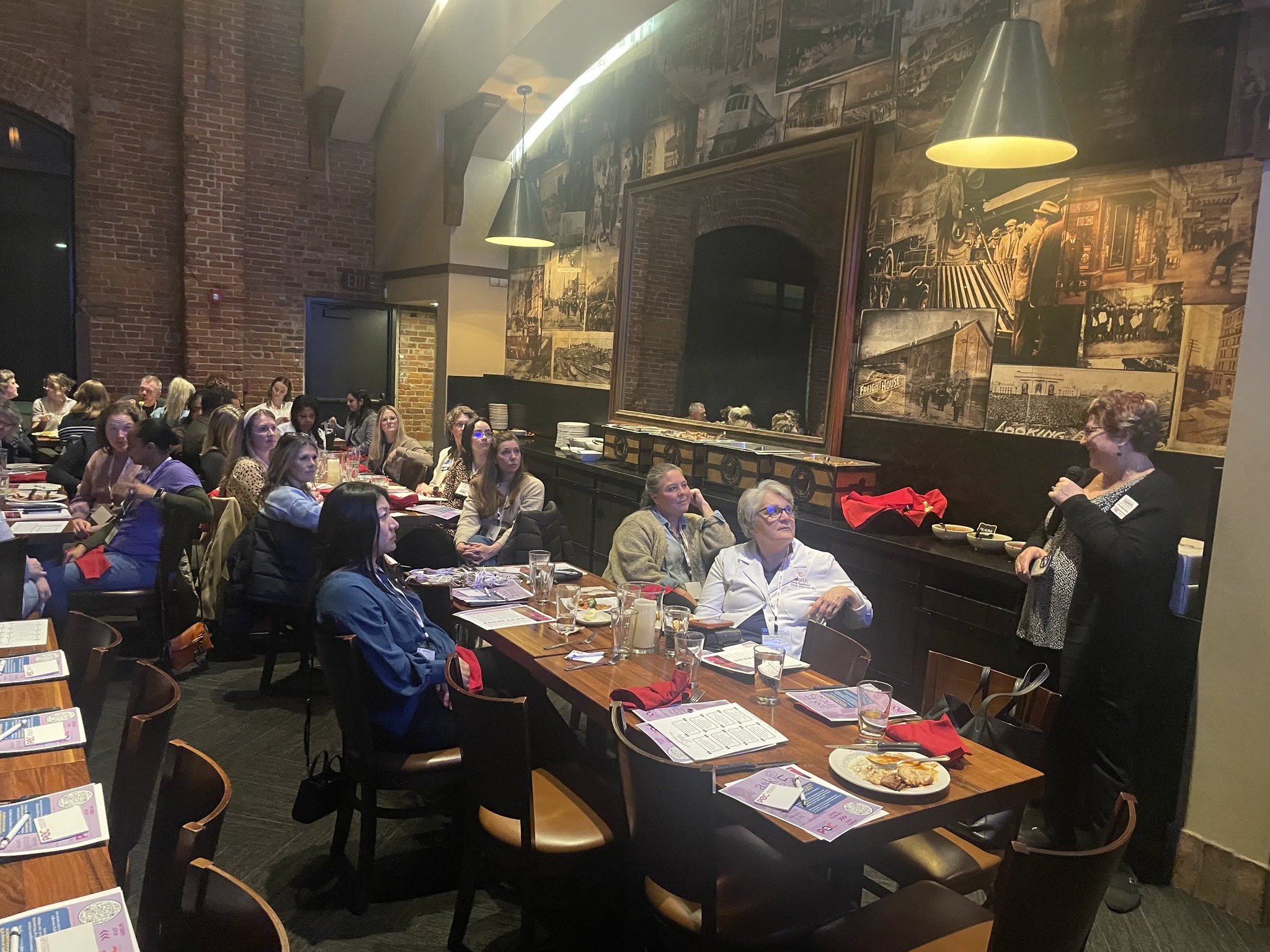
In January and February 2026, the Missouri Perinatal Quality Collaborative hosted a series of six regional dinners that focused on sharing recommendations for extended postpartum care, based on the recently published report, “The One-year Postpartum Pathway.”
Open to a broad mix of professionals who interact with postpartum patients, including obstetric and primary care providers, community-based organizations, birth workers, government agencies, public health workers, peer support specialists, patients with lived experience, and others, the events reached more than 140 individuals. Attendees had the opportunity to connect over dinner, building strong, collaborative communities of postpartum care providers throughout each region and across Missouri.
Each dinner began with background information on the state of postpartum care in Missouri. The difficult reality is that 82% of maternal deaths in Missouri occur postpartum, and the majority of those actually occur after the traditional six-week postpartum period ends. Additionally, Missouri’s Pregnancy Associated Mortality Review Board identified that 80% of those pregnancy-related deaths were preventable.i
While the data is similar at a national level, Missouri set out to better understand and address postpartum care challenges. In 2024, the Missouri Optimizing Postpartum Care Task Force was convened by MO PQC through funding provided by the Missouri Department of Health and Senior Services as part of then-Gov. Mike Parson’s Maternal Mortality Prevention Plan with a complex, yet important charge: to identify a pathway for postpartum care from delivery through one year.
As dinner was served, the attendees heard from a local member of the task force about their findings and recommendations for improving care for moms during the 12 months after delivery, outlined in “The One-year Postpartum Pathway.” The pathway emphasizes the following goals for every postpartum mom in Missouri.
- Attend an in-person or virtual appointment within three weeks postpartum and a comprehensive postpartum visit by 12 weeks with an obstetric provider
- Attend a primary care appointment with a primary care physician by six months postpartum
- Know your pregnancy health history and ongoing postpartum health concerns
- Know your postpartum care team members and their roles
- Receive access to resources and treatment for identified needs
Additional information about the recommendations can be found in the report, including topics such as best practices during the one-year postpartum continuum, chronic and pregnancy-induced conditions, mental health, nonclinical care needs and care coordination, maternal workforce and recommendations to address barriers to implementation.
After the presentation, guests had the chance to engage in discussion about their own barriers in providing postpartum care as well as regional solutions and resources for helping moms and families in the postpartum period. Recurring themes across conversations included what a postpartum care team should look like, how clinical and community providers can come together to support moms and families, and how we can overcome obstacles to deliver quality, comprehensive and accessible postpartum care.
Local projects and resources were highlighted, including several individuals implementing postpartum projects supported by MO PQC, which aim to support postpartum care through innovations including mental health education, fourth trimester clinical care and transition to primary care, doula education, and community-guided support groups.
What did the participants think?
The postpartum dinners provided attendees with a unique experience focused on a timely topic — one that was both informative and collaborative.
Kim Hawley, LMSW, a co-author of “The One-year Postpartum Pathway,” and a co-host at the Kansas City, Mo., dinner, remarked that “relationships” and “communication” were two key words that stood out during discussions.
“The attendees advocated for creating relationships between specialties and being comfortable with clear communication,” Hawley said. “An obstetrician and a primary care physician talked about picking up the phone and speaking with each other about a patient. They said those interactions are so helpful with referring clients on to the next stage of care in the year postpartum.”
Hawley also was heartened to hear about the different ways that Missourians are delivering postpartum care, whether through the services of postpartum doulas or resources like the Maternal Health Access Project’s psychiatric helpline.
In Cape Girardeau, Mo., Rebecca Burger, R.N., BSN, CLC, CHW, (another co-host and co-author of the pathway report) noted a good mix of professionals participated in the southeast dinner, including doulas, midwives, OB managers and educators and home visitors.
“We felt like we had a good turnout overall … I was pleased to hear from a midwife at Mercy that they are having their moms see their primary care providers during postpartum to start bridging care.” Burger said.
At the St. Louis dinner, attendees mirrored the insights and recommendations of the task force: quality, comprehensive postpartum care starts well before delivery and discharge and requires recognizing that the postpartum team is bigger than an OB and a PCP — it can include roles such as a postpartum doula, lactation consultant, therapist and more.
Reggi Rideout, one of the facilitators of the Missouri Optimizing Postpartum Care Task Force, observed that professionals from different fields were learning about their respective services and making plans to share information and referrals with their clients.
The connections made across professions and regions were inspiring to see as conversations continued long after the plates had been cleared.
What is next for MO PQC’s postpartum initiatives? The creation of “The One-year Postpartum Pathway” is just the start of the conversation. Changing the delivery of postpartum care and patients’ expectations for quality, comprehensive postpartum care will take time and resources.
MO PQC will continue with promotion and dissemination of the pathway, including incorporating feedback and additional evidence-based recommendations that become available, continuing to provide opportunities for postpartum care providers to connect and discuss implementation, and through the development of supplemental resources. To provide feedback on the pathway or input on future resources or events, please contact [email protected].
i Missouri Department of Health and Senior Services. (2025, July). Missouri Pregnancy Associated Mortality Review 2018-2022 Annual Report [PDF]. https://health.mo.gov/data/pamr/pdf/2025annual-report.pdf